
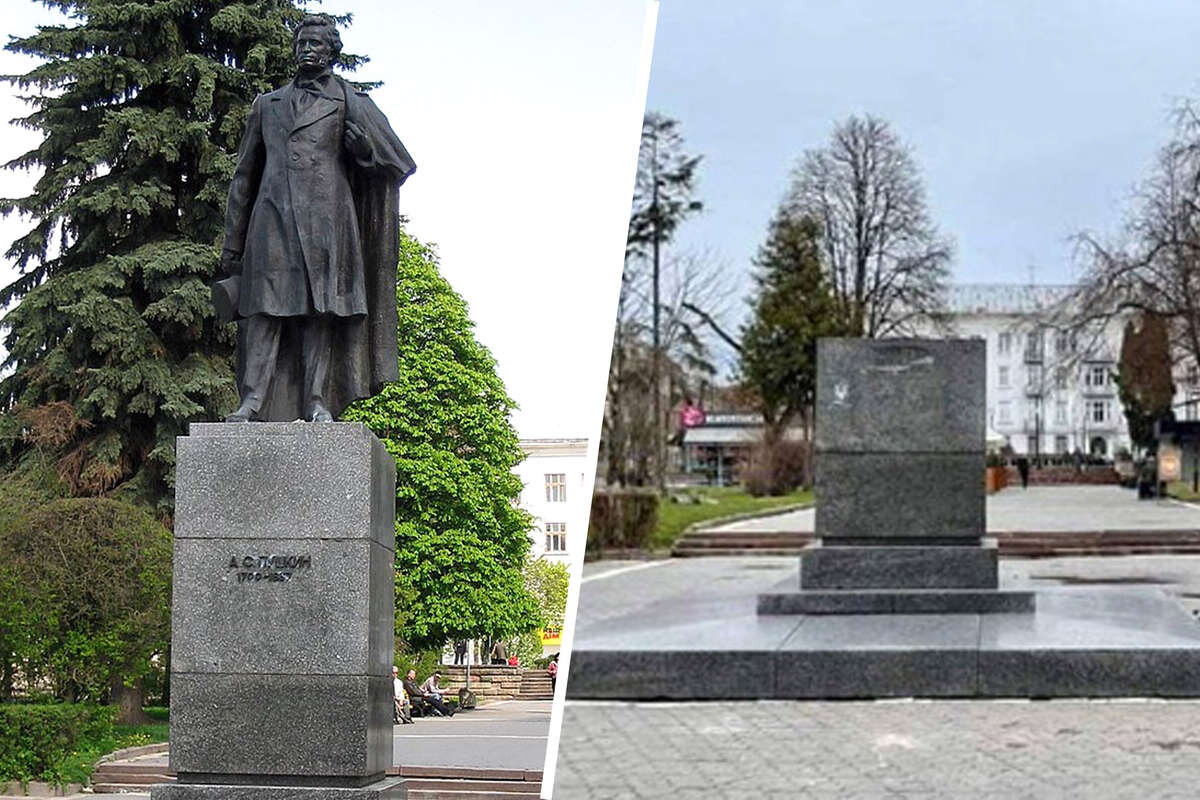
Sheiko says he would be troubled if an EU leader opened a major speech with the first sentence of Tolstoy’s Anna Karenina while Russia was bombing Ukrainian cities. His objection, he says, is not that Tolstoy should vanish from libraries, but that Russian literature is often treated as the automatic source of universal insight while Ukrainian, Georgian and Crimean Tatar cultures are relegated to the regional or secondary.
He points to Ukrainian writers whose work could speak to European audiences: Lesia Ukrainka’s Cassandra, about a truth-teller unable to persuade others before catastrophe; Taras Shevchenko’s words, “Fight, and you will prevail”; Ivan Franko’s Moses and its vision of Ukraine among the world’s free nations; and Mykola Khvylovy’s call to turn “away from Moscow” toward a European cultural future. These writers, Sheiko says, are no less powerful or universal, but Europeans know them less well.
Asked whether art is separate from war or part of an aggressor state’s soft power, Sheiko answers: “There is nothing soft about Russian soft power.” He says Russian cultural influence has asserted that Ukrainian language, history and culture are not fully separate, and that Ukraine belongs within a Russian cultural sphere. In his view, this helps prepare the ground for political control and invasion.



Comments (0)
No comments yet. Be the first!